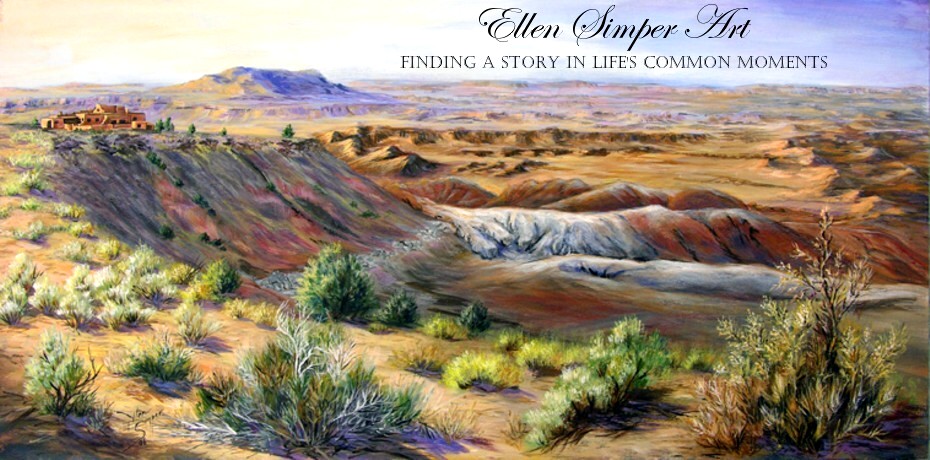
 I have posted paintings I have done in the past of the area of NE Arizona. The first painting is of the Painted Desert, specifically the Painted Desert Inn which resides on a hill overlooking the expanse of amazingly colored contours of the Desert. Depending upon time of day and the amount of moisture and/or dust in the air, the land has a fascinating array of views across the varied levels of hills and valleys.
The second painting is a composite of items from the Petrified Forest posed below a remarkable feature of the PF Park - the Agate house. It is an Anasazi dwelling which was built from pieces of petrified wood. There is a good hike to view the remote ancient house. The Anasazi pot is not there and certainly not whole. The portrayal of the pot was painted from looking at pieces of pottery shards that can be dug up out of the ground. The chunk of petrified wood was painted from pieces that are located all over the Park. The hill below the Agate house is strewn with petrified wood and is amazing to behold. The Park has suffered a continual loss of wood over the years since it was made into a National tourist place to visit. The photos of the Park from the 1920's shows the thick dotting of wood which is no longer the situation.

The third painting is of Walpi on the Hopi Reservation, a village which is currently inhabited which was "built" generations ago. It is a place with a lot of charm and interesting views of an old culture. The position for the inhabitants on top of a high plateau, a mesa above a desert floor was for protection from attackers. It was easy to defend from invaders when the only access was a narrow rock bridge that connects to another mesa village. The community planted crops below off the mesa as well as herding sheep to forage desert vegetation. Many other aspects of the living process were complicated by the boundaries of being perched on a mountain with steep side drop-offs.

The fourth painting is of a closer up "detail" of Hopi women in traditional clothing. A first portrayal of people in the painting brought an abrupt realization pointed out to me that Hopis and Navajos dress differently. I had to make the appropriate changes in the attire.

The last painting is one I named "Hopi Warriors". It was painted from a 1910 black and white photograph of the 2 little boys. They are 2 of the dwellers who lived at Walpi in a rapidly changing invasion of their Hopi culture and life-style. For the moment, they are 2 naked boys with bow and arrow looking for something at which to aim. It is interesting to contemplate what they are thinking while a photographer is snapping their images for posterity.




No comments:
Post a Comment